Dystopia, by its very nature, lends itself better to dramatic tension far better than utopia does, even in these seemingly increasingly dark and depressing times. Just as well, then, that this show has a streak of subversive humour that permeates proceedings. In some ways, this is drama about drama, because some forty ‘tweens’ – as the dialogue calls them – are in a ‘theatre camp’. It’s an American concept, but there are British equivalents, such as Goldsmiths’ Musical Theatre Summer School, or ArtsEd’s Holiday Courses. Neither of those, however, mean staying in the great outdoors overnight for the school summer holidays, and so when the Apocalypse happens (how and why it happens is another show for another time), the campers find they are camping indefinitely.
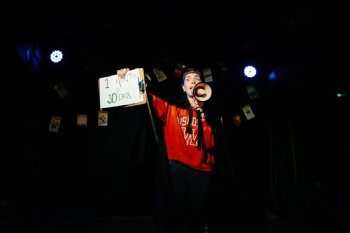
The Stephen Sondheim musical Into The Woods is repeatedly referenced, partly because it goes with being out in the woods (in Maine, as it goes: no need to directly reference Stephen King novels set there), and partly because a production of it is to be staged at the end of camp. Post-apocalypse, however, nobody knows when camp will end. Ellen, the camp’s manager, an unseen character, escapes at the earliest opportunity, leaving the camp effectively leaderless. The story is told in reverse chronological order. By the end (of the story, at the beginning of the show) nobody has set the camp on fire, but things are pretty chaotic – and shouty – to say the least.
There is the occasional foray into feminist thinking as the young ‘counsellors’, only a few years older than the campers, do what they can to continue a daily routine of drama classes and workshops, hence the show’s title. Naturally, there is disagreement as to whether this should continue, or if the campers might be better off learning survival techniques. Either way, this is not a ‘smash the patriarchy by any means possible’ kind of narrative – in any event, the Apocalypse has more or less done that anyway. A lot is packed into this show, which has a vibrancy and vigour about it that goes with its young characters and young cast. Starting at the end adds intrigue to the story, and a lot of questions are resolved by the curtain call, by which point how the group got to where they were (or rather, will become) became very much evident.
There are gentle digs at the theatre world and its various stereotypes, and at the same time, the play is a love letter to theatre and all those who aspire to either perform on stage or work behind the scenes in tech or design. Just about enough of the Stanislavski Method is revealed for anyone in the audience who knows very little about it, whilst those very familiar with it are not left patiently waiting while all is explained. Indeed, the script overall indulges in subtlety, even amongst all the raised voices, raising intriguing points about what really matters in life without being didactic or moralising about it. There may not be anything particularly groundbreaking about the idea that we should live our lives to the full because none of us know what the future holds. Still, the idea that ‘hell is other people’ is gloriously brought to life in this thoroughly amusing yet thoughtful production.

Review by Chris Omaweng
Life at a theatre camp in the northern woods of Maine takes a shocking turn when five counsellors suddenly become responsible for more than forty campers after the world ends on the final day of camp. Their artistic dreams collide with the abrupt demands of survival, forcing women who once built imaginary worlds onstage to confront a terrifying new reality offstage.
Erika – Molly Wolff
Claire – Lydia Hopgood
Dani – Christie Griffin
Mary – Frankie Minnock
Elizabeth – Cate Johannessen
Written and Directed by Maggie Dickinson
Produced by Cate Johannessen/Living Room Productions
Lighting Design – Lev Govorovski
Sound Design – Alex Wedlock
STANISLAVSKI CAN’T SAVE ME FROM THE APOCALYPSE
Barons Court Theatre
5 to 9 May 2026

